
Introduction
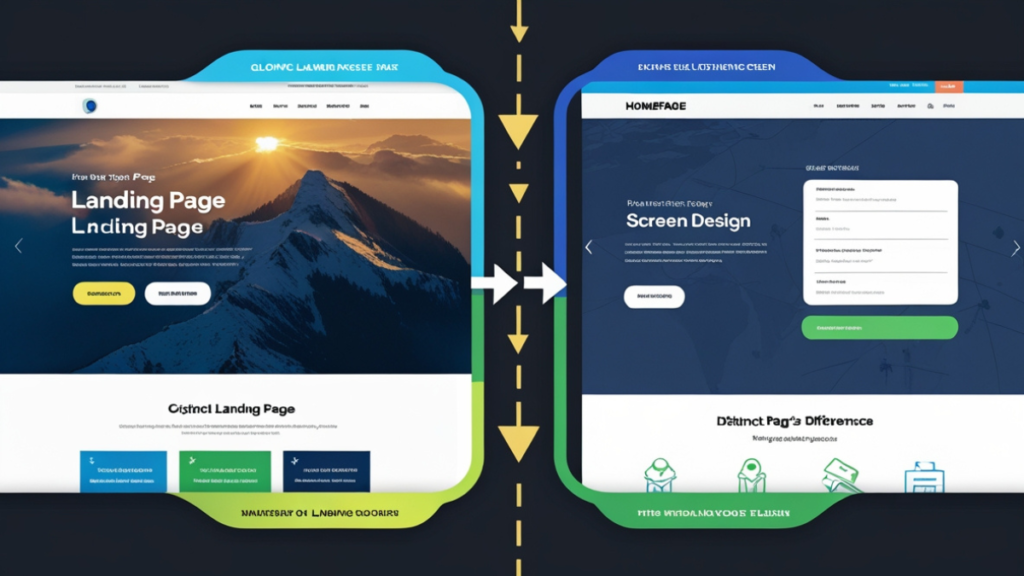
When building a website, you’ll encounter two critical web pages: landing pages and homepages. Many people mistakenly believe these pages serve the same function, but they are designed for entirely different purposes. Understanding the differences between landing pages and homepages can help businesses optimize their online presence, improve conversions, and enhance user experience.
In this article, we’ll explore the unique roles of landing pages and homepages, their advantages, and how you can effectively utilize each for maximum results.
Table of Contents
- What is a Homepage?
- What is a Landing Page?
- Key Differences Between Landing Pages and Homepages
- Purpose and Functionality Comparison
- Design and Structure of Homepages vs. Landing Pages
- User Experience and Navigation
- SEO Strategies for Homepages and Landing Pages
- Conversion Rate Optimization (CRO)
- When to Use a Homepage vs. a Landing Page
- Examples of Effective Homepages
- Examples of High-Converting Landing Pages
- Common Mistakes to Avoid
- Best Practices for Homepages and Landing Pages
- FAQs
- Conclusion and Recommendation
1. What is a Homepage?
A homepage is the main entry point of a website. It serves as the face of a brand, providing visitors with an overview of the site’s content, products, or services. The primary purpose of a homepage is to introduce visitors to a business and encourage further exploration.
Key Features of a Homepage:
- Displays the company’s branding, logo, and navigation menu
- Provides links to various sections of the website
- Showcases company values, products, or services
- Encourages users to engage with multiple aspects of the site
Example:
A company like Apple uses its homepage to highlight new product releases, provide company updates, and direct users to different sections of their website.
2. What is a Landing Page?
A landing page is a standalone web page designed specifically for marketing campaigns. Its primary goal is to drive conversions by encouraging users to take a specific action, such as signing up for a newsletter, downloading an eBook, or purchasing a product.
Key Features of a Landing Page:
- Focuses on a single marketing goal
- Has a compelling call-to-action (CTA)
- Uses persuasive copy and minimal distractions
- Often designed for paid advertising campaigns
Example:
A company running a Google Ads campaign might create a landing page with a special discount offer to attract potential customers.
3. Key Differences Between Landing Pages and Homepages
| Feature | Homepage | Landing Page |
|---|---|---|
| Purpose | Provides an overview of the website | Focuses on conversions |
| Navigation | Multiple links to different sections | Minimal or no navigation |
| Content | Broad and informative | Targeted and action-driven |
| Target Audience | General website visitors | Specific campaign-driven users |
4. Purpose and Functionality Comparison
The homepage is like the front door of your business, welcoming all visitors and providing them with options to explore. It caters to multiple audience segments, including potential customers, existing clients, and investors.
On the other hand, a landing page is created with a singular focus. It’s optimized for specific marketing goals, such as lead generation or sales conversions.
5. Design and Structure of Homepages vs. Landing Pages
Homepage Design Best Practices:
- A clear brand identity
- A well-structured navigation menu
- Engaging hero section with a strong value proposition
- Sections for services, testimonials, and latest updates
Landing Page Design Best Practices:
- A compelling headline and subheading
- An attention-grabbing CTA button
- Persuasive and concise content
- Minimal navigation to reduce distractions
6. User Experience and Navigation
Homepages include navigation menus, allowing users to explore different sections of the website. While this improves engagement, it can sometimes lead to distractions and fewer direct conversions.
In contrast, landing pages are designed to guide visitors toward a single action, making them more effective for lead generation and sales conversions.
7. SEO Strategies for Homepages and Landing Pages
- Homepage SEO Best Practices:
- Use a well-structured URL (e.g., example.com)
- Optimize for brand-related keywords
- Include internal links for better site navigation
- Landing Page SEO Best Practices:
- Use a targeted keyword for a specific campaign
- Optimize for conversion-focused keywords
- Improve page speed and mobile-friendliness
8. Conversion Rate Optimization (CRO)
Improving Homepage Conversions:
- Include a search bar for easy navigation
- Add clear CTA buttons on different sections
- Optimize for fast loading speeds
Improving Landing Page Conversions:
- Use A/B testing to determine the best CTA
- Add trust signals like testimonials and security badges
- Focus on a single, compelling offer
9. When to Use a Homepage vs. a Landing Page
| Scenario | Use Homepage | Use Landing Page |
|---|---|---|
| General brand awareness | ✅ | ❌ |
| Product or service promotion | ❌ | ✅ |
| SEO traffic | ✅ | ✅ |
| Paid advertising campaigns | ❌ | ✅ |
10. Examples of Effective Homepages
- Amazon: Showcases various products and deals.
- Tesla: Highlights new car models and innovations.
11. Examples of High-Converting Landing Pages
- Netflix: A simple signup page with a clear CTA.
- Shopify: A free trial landing page for new users.
12. Common Mistakes to Avoid
- Using too much text on landing pages
- Not optimizing homepages for SEO
- Failing to include clear CTAs
13. Best Practices for Homepages and Landing Pages
✅ Keep homepages informative but not overwhelming
✅ Ensure landing pages are conversion-focused
✅ Optimize both for SEO and user experience
14. FAQs
1. Can a homepage act as a landing page?
Not effectively. Homepages are too broad, while landing pages are designed for conversions.
2. Do landing pages rank on Google?
Yes, but they require strong SEO and relevant content.
3. Should a landing page have navigation?
No. The goal is to keep visitors focused on the CTA.
15. Conclusion and Recommendation
Understanding the differences between landing pages and homepages is crucial for building a successful website. While homepages provide a broad introduction, landing pages are designed to drive specific conversions.
For expert web solutions and high-performance landing pages, check out Codinov. 🚀